Fire & Ice
Students will have the opportunity to experience first-hand the significant effect geography has on the environment and human societies. Beyond the academic focus of the study tour, Fire & Ice provides students with the quintessential American experience of a road trip. The open-road of America has long served as a symbol of freedom. Looking out the window, both literally and metaphorically, allows students to go into the depths of their imagination and to ignite spontaneous discussions that are so important to the human experience.
Students will be challenged to understand and analyse a range of uniquely Alaskan and Hawaiian attributes that are the result of powerful geological forces. Immersion in local landscapes will be supplemented by classroom studies, guided visits to museums and lectures from local experts. A range of literature associated with the concepts of geography, ecology and culture will form the foundational knowledge necessary for complete understanding.
Fire & Ice is founded on research, reflection, and creative rigour. As in any great story of adventure, the trip will include motifs that contribute to bigger themes impacting cultures, societies, regions, and in turn, the world.
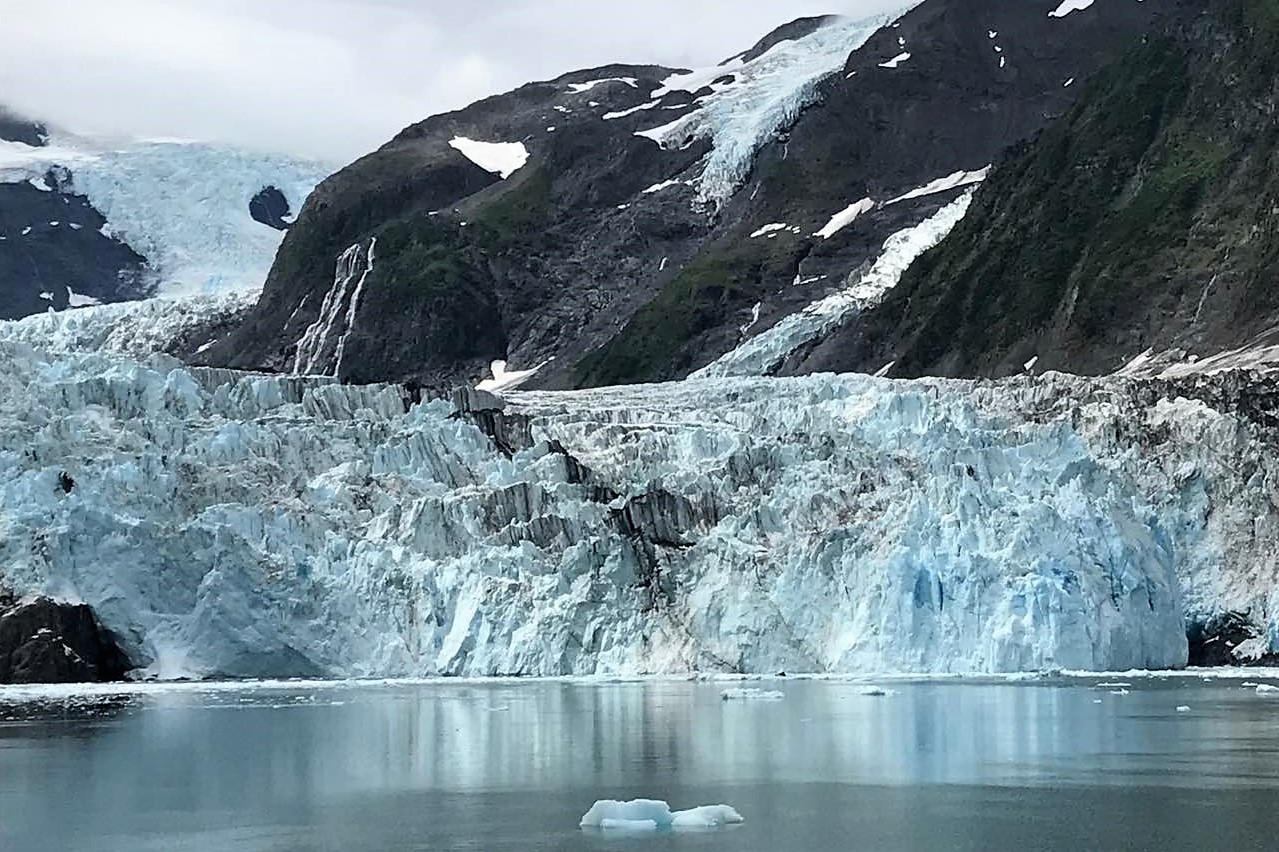
The only two non-contiguous US states, products of similar geology yet representing vastly different geographies, Hawaii and Alaska offer opportunities for comparison like no other locations on the planet. The two unique locales, both the result of amazing tectonic forces, contain flora, fauna and cultures that offer robust research opportunities and a critical understanding of Earth as our true and essential home.
Students will have the opportunity to experience first-hand the significant effect geography has on the environment and by extension human societies. While seemingly dichotomous locations, Alaska and Hawaii have much more in common than one would expect. Challenged by unique ecological niches, endemic species have developed distinct adaptations to thrive. Similarly, local inhabitants developed rich cultures and histories naturally suited to their respective environments. Further, initial periods of relative isolation were abruptly ended with eventual annexation. Even the current challenges facing the states, specifically how to balance economic development and the need to protect unique ecology and traditions, can be viewed in parallel.
Beyond the academic focus of the study tour, Fire & Ice provides students with the quintessential American experience of a road trip. The open-road of America has long served as a symbol of freedom. Looking out the window, both literally and metaphorically, allows students to go into the depths of their imagination and to ignite spontaneous discussions that are so important to the human experience. Every day, Fire & Ice students will have a specific destination, but the adventure is in how participants get there and the experiences they have along the way.
Students will be challenged to understand and analyse a range of uniquely Alaskan and Hawaiian attributes that are the result of powerful geological forces. Immersion in local landscapes will be supplemented by classroom studies, guided visits to museums and lectures from local experts. A range of literature associated with the concepts of geography, ecology and culture will form of the foundational knowledge necessary for complete understanding. Texts will range from indigenous stories developed through rich traditions of storytelling, scientific articles written by academics and policy papers exploring the implications of modern economic development.
In Alaska, students will learn how harsh climates drive biological and cultural evolution. They will also examine how the push to develop mineral and hydrocarbon resources threatens the species and traditions that have survived some of the harshest conditions on the planet. In Hawaii, students will learn how extreme isolation has spurred the evolution of endemic species and one-of-a-kind cultural practices. They will also explore how a global desire for leisure resources can challenge the sustainability of island life. In both locations, students will examine how modern tourism is being used as an alternative to more ecologically damaging forms of development.
The course will culminate with the production of a written analysis comparing and contrasting the two locations through one of the critical lenses developed during the study tour. The content from this deliverable will then be presented to other students on the trip in order to elicit discussion and discourse.

Ms Chelsey Kueffer is the Head of Global Learning and teaches Kids Canon, BELLA, and Literature & Drama at Studio. She studied International Education and English at Columbia University. She also holds a first degree in professional journalism and has worked on projects with ABC World News in New York City. She is a USA certified teacher.

Mr John Dietrich is a Florida State Certified Teacher in Secondary Science, with a Masters in Urban and Regional Planning and a first degree in Anthropology. He has published research papers on the nexus between economic development and environmental protection. He currently serves as Head of STEAM and teaches the Scientific Explorations courses at Studio.
-

Online from 18th December 2017
On site 7th July to 30th July 2018 (24 days)
Ages 12 to 16 -